
Why Is the Grocery Franchise Business in India Growing So Fast?
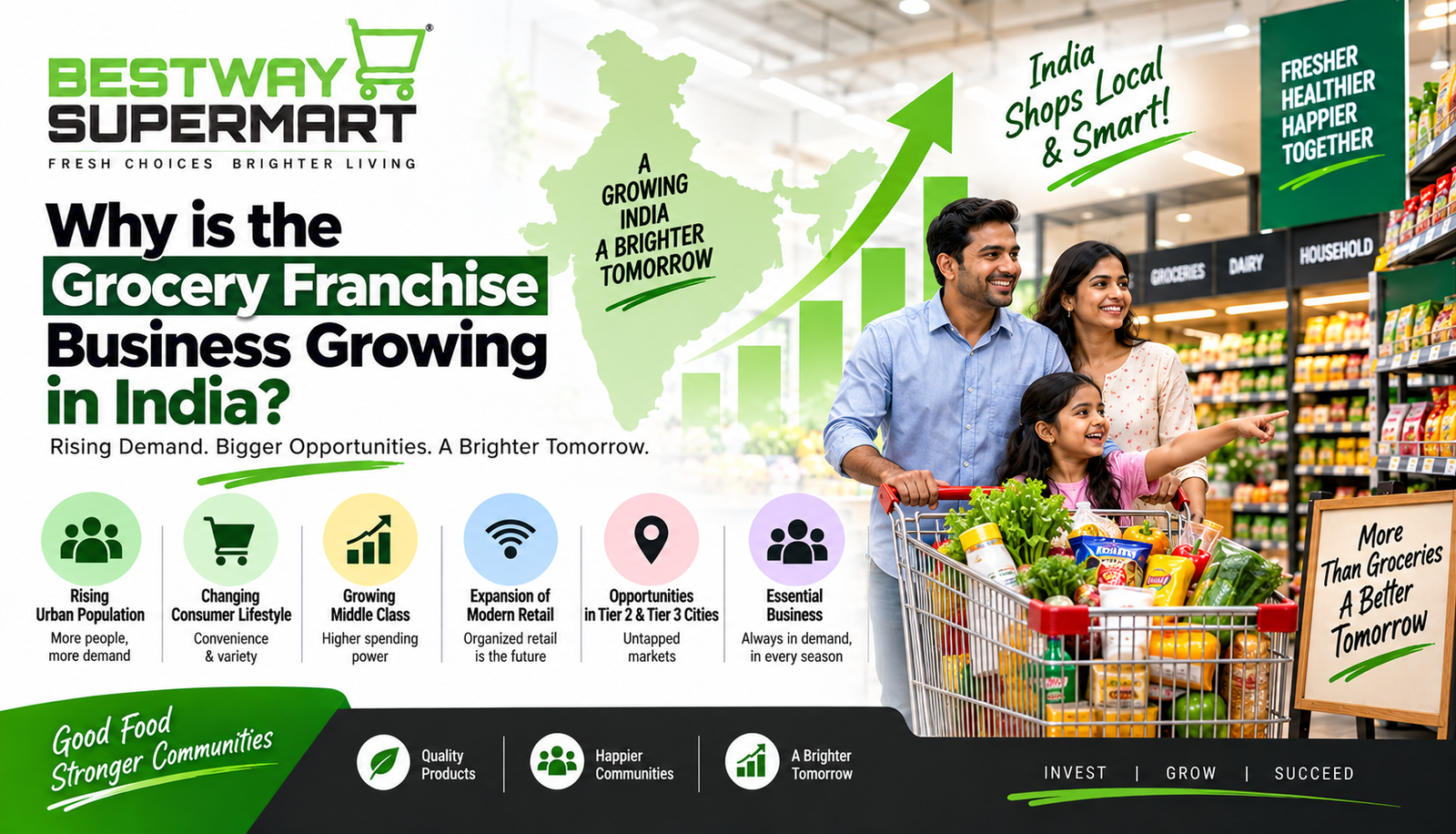
India’s grocery market has always been closely connected to everyday life. People need food, household essentials, personal-care products, and other daily necessities regardless of economic conditions. What is changing is how customers shop for these products. Modern stores, organized retail, digital payments, wider product choices, and convenient shopping experiences are changing the traditional grocery landscape.
This shift is creating new opportunities for entrepreneurs. The grocery franchise business in India is attracting attention because it combines the regular demand for essential products with an established business format. Instead of building a retail concept completely from scratch, an entrepreneur can work within a franchise model and focus on running the store efficiently.
But what exactly is driving this growth? Let’s look at the major reasons behind the expanding grocery franchise market.
Changing Shopping Habits Are Supporting Grocery Franchises
Indian consumers are becoming more selective about where and how they shop. A customer may still value the neighborhood kirana store, but many shoppers also appreciate organized supermarkets where they can find multiple categories under one roof.
A modern grocery store can offer:
- Organized product displays
- Multiple brands and pack sizes
- Transparent pricing
- Digital payment options
- Convenient shopping
- Household products alongside groceries
- Promotional offers
This combination of convenience and variety is helping organized grocery businesses attract customers in both established urban areas and developing communities.
Why the Grocery Franchise Business in India Appeals to Entrepreneurs
Starting a retail store independently can involve developing a brand identity, establishing supplier relationships, planning store operations, and figuring out how to attract customers. A franchise model can provide a structured approach to many of these areas.
The grocery franchise business in India can appeal to entrepreneurs who want to enter the retail sector while working with an established business model.
Depending on the franchise, support may include areas such as:
- Store planning and setup guidance
- Branding and marketing support
- Product and category planning
- Operational guidance
- Staff training
- Business-process support
The exact support varies between franchise companies, so potential investors should carefully evaluate the franchise agreement and business terms before making a decision.
Rising Demand for Organized Grocery Retail
One of the biggest factors behind grocery franchise growth India is the gradual expansion of organized retail. As residential communities grow, customers often look for stores that can handle a broader range of shopping needs.
For example, a family may want to purchase rice, cooking oil, vegetables, breakfast products, cleaning supplies, toiletries, and snacks during the same shopping trip. A supermarket that offers these categories together can become a convenient destination.
This creates an opportunity for franchise stores to position themselves as neighborhood shopping hubs rather than simply places to buy groceries.
Urbanization Is Creating New Retail Opportunities
India’s towns and cities continue to evolve. New residential societies, commercial developments, and expanding neighborhoods create demand for nearby retail services.
When a new housing community becomes populated, residents quickly begin looking for convenient access to everyday essentials. A well-positioned grocery supermarket can become part of the area’s daily routine.
This is particularly relevant for franchise entrepreneurs because a repeat-purchase category such as groceries can support regular customer visits when the store provides the right products, pricing, service, and convenience.
Convenience Has Become a Major Customer Priority
Modern consumers are busy. Working professionals, families, students, and other shoppers often prefer completing their purchases quickly.
A supermarket can provide convenience by bringing different product categories together in one location.
Imagine a customer who needs breakfast items, detergent, toiletries, snacks, and vegetables. Visiting several specialized shops can take considerable time. A well-organized supermarket allows the customer to complete much of this shopping in one trip.
This demand for convenience is one of the reasons the grocery franchise business in India continues to attract entrepreneurs.
Digital Payments and Technology Are Changing Grocery Retail
Technology has also changed the supermarket experience. Digital payments have become common across Indian retail, while POS systems and inventory-management technology can help stores organize their operations.
Modern retail technology can support:
- Faster billing
- Digital payment acceptance
- Inventory monitoring
- Sales reporting
- Product tracking
- Customer data management
- Promotional management
For franchise owners, technology can make it easier to monitor store performance and identify products that sell quickly or need replenishment.
Consumers Want More Product Choices
Traditional grocery shopping may have focused heavily on basic necessities. Today’s supermarket customer often expects more variety.
A modern store may offer:
- Staple groceries
- Fresh fruits and vegetables
- Dairy products
- Bakery items
- Packaged foods
- Snacks and beverages
- Personal-care products
- Cleaning supplies
- Household essentials
- Premium and specialty products
This broader assortment can increase convenience while also creating opportunities to increase the average value of each shopping basket.
The Franchise Model Can Reduce the Learning Curve
Retail looks simple from the outside, but operating a supermarket involves many moving parts. Purchasing, inventory, pricing, shelf management, staffing, customer service, promotions, and daily financial control all need attention.
An entrepreneur entering independently has to develop these processes over time. A franchise may provide an existing operational framework, which can make the learning process more structured.
However, franchise ownership still requires active management. A franchise brand cannot replace good location planning, disciplined operations, customer service, and financial management.
Grocery Demand Is Based on Everyday Needs
Another reason for grocery franchise growth India is the nature of the grocery category itself. Unlike many discretionary products, groceries and household essentials are purchased regularly.
People need products such as:
- Rice and flour
- Pulses
- Cooking oil
- Milk and dairy
- Fruits and vegetables
- Cleaning products
- Personal-care essentials
- Packaged food
This recurring demand can create opportunities for businesses that consistently maintain product availability and customer trust.
Tier 2 and Tier 3 Cities Are Creating Opportunities
The growth of organized retail is not limited to major metropolitan cities. Smaller cities and developing towns are also becoming important retail markets.
As incomes, infrastructure, housing developments, and consumer expectations change, organized supermarkets can find opportunities in areas where modern retail options are still developing.
For an entrepreneur, this means the ideal opportunity may not necessarily be in the most expensive commercial area. A growing residential market with the right customer profile can sometimes be more relevant.
What Entrepreneurs Should Consider Before Investing
The growth of the sector does not mean every grocery franchise will automatically succeed. Entrepreneurs should evaluate the opportunity carefully.
Important factors include:
- Local customer demand
- Competition in the area
- Store size and layout
- Franchise fees and overall investment
- Product margins
- Rental and operating costs
- Supplier arrangements
- Brand support
- Staff requirements
- Expected break-even period
A detailed financial plan should be prepared before committing capital.
Real-Life Example: A Growing Residential Neighborhood
Consider a newly developed residential area where hundreds of families have moved in over the past few years. Initially, residents may rely on small nearby shops or travel to a larger market.
A professionally operated supermarket offering groceries, fresh produce, household supplies, snacks, dairy, and personal-care products can gradually become the neighborhood’s regular shopping destination.
The opportunity comes not simply from opening a store but from becoming useful to the people living around it.
FAQs About the Grocery Franchise Business in India
1. Why is the grocery franchise business growing in India?
The growth is supported by regular demand for essential products, expanding urban and residential areas, changing shopping habits, organized retail, convenience, and wider product choices.
2. Is a grocery franchise a good business opportunity?
It can be an opportunity for entrepreneurs who understand their local market and manage inventory, costs, customer service, staff, and operations effectively. Results vary by location and business model.
3. What is driving grocery franchise growth India?
Major factors include organized retail expansion, urbanization, increasing consumer expectations, technology adoption, convenient shopping formats, and demand for multiple product categories under one roof.
4. Can grocery franchises work in smaller cities?
Yes. Smaller cities and developing towns can offer opportunities where organized supermarket options are growing. Local demand and competition should be evaluated before selecting a location.
5. What products are usually sold in a grocery franchise?
A supermarket may sell staples, packaged foods, dairy, fresh produce, snacks, beverages, household cleaning products, personal-care items, and other everyday essentials.
6. Does a franchise provide business support?
Many franchise brands provide some combination of operational, branding, training, marketing, or store-setup support. Entrepreneurs should verify exactly what is included in the specific franchise agreement.
7. What should I check before choosing a grocery franchise?
Evaluate the brand, investment requirements, agreement terms, location potential, product assortment, margins, operational support, competition, and expected expenses before making a decision.
Final Thoughts: Is the Grocery Franchise Business in India Worth Exploring?
The grocery franchise business in India is growing because it sits at the intersection of everyday consumer demand and India’s changing retail environment. Customers want convenience, variety, organized stores, easy payments, and reliable product availability, while entrepreneurs are looking for structured opportunities in essential retail.
At the same time, success requires more than simply opening a supermarket. Location, customer understanding, inventory control, pricing, service quality, staff management, and financial discipline all matter.
If you are exploring an opportunity in organized grocery retail, Bestway Supermart can be considered as a franchise option for entrepreneurs looking to build a supermarket business around everyday consumer needs.
The opportunity is promising, but the smartest approach is to research carefully, understand your local market, compare franchise models, and create a realistic business plan before investing. With the right combination of location, product selection, operations, and customer service, a grocery franchise can become a strong part of India’s evolving retail landscape.